

Screen protector for digital clinic equipment
Displays in clinics are exposed to intense daily wear and tear: Frequent disinfection, fingerprints, mechanical wear and tear, and changing lighting conditions continuously damage the surfaces. Pure cleaning without physical protection only addresses symptoms, not the root cause. The strategic alliance for display protection and cleaning Neoxum and ROGGE address exactly this process gap.

Films and hybrid glass compared
For professional display protection in hospitals, two main categories are available: display protection films and OnScreen® Hybrid glass. Clear films are suitable when precise color reproduction is diagnostically relevant. Anti-reflective variants, on the other hand, significantly reduce glare in bright treatment rooms; Medical studies on display protection demonstrate the relationship between reflection reduction and reduced eye strain for personnel.
Hygiene care in hospital everyday life
A structured care plan consists of three consecutive steps. First, a defined pre-cleaning process is carried out using specific cleaning agents for LCD, TFT, LED, OLED, and touch panels. Next, the display film or hybrid glass is applied precisely. Finally, regular, gentle maintenance intervals ensure the optical quality, rather than uncontrolled quick-wipe actions that can cause scratches and create glare effects. Conforming disinfection of the surfaces of display film or hybrid glass ensures hygiene in everyday life.
- Pre-cleaning: Defined tested cleaning agents For all common display technologies, LCD, TFT, LED, OLED and touch panels, remove particles, adhesive residues and residues completely before application.
- Accurate application: The contour-accurate mounting of the display protector with optional cut-outs for sensors and cameras ensures full device functionality and prevents air inclusions.
- Maintenance intervals: Regular light cleaning instead of aggressive quick cleaning reduces mechanical wear and maintains the optical clarity permanently.
- Clinical hygieneDisinfection of protected medical touchscreens and medical displays takes effect no the original display surface. The device display is protected and comes no contact with detergent or disinfectant.
- Compatibility: The protective films are compatible with disinfectant agents of hospital and industrial quality and are UV-resistant; UV disinfection systems do not damage the protective layer either.
Keeping digital signage permanently readable
Digital orientation systems, patient call systems and guidance systems, i.e., any signage solution in the hospital area, require stable readability. Highly frequented displays in waiting areas, reception areas and hallways accumulate scratches and smudges that impair contrast and readability. Protective films and hybrid glass are here the investment in the digital infrastructure.
Interactive kiosk systems and digital door signs are particularly susceptible to mechanical wear caused by daily touch operation. Anti-reflective protective coatings ensure readability even in direct sunlight: recommended when displays are operated in brightly lit entrance areas or under artificial lighting.
Screen protector specifically designed for healthcare devices
Special requirements apply to device surfaces in healthcare Strict requirements, Frequent chemical Disinfection, Multi-user operation and regulated hygiene processes claim displays more strongly than in other industries.

Antiviral and antibacterial protective films
Neoxum offers a specialized display film with an antimicrobial surface, the effectiveness of which has been tested according to ISO 21702:2019-05: it showed a 88% reduction in viruses % within 30 minutes compared to the human coronavirus strain 229E. The active inactivation of viruses and bacteria between regular disinfection intervals has been proven to reduce the risk of transmission on multi-use touchscreens.
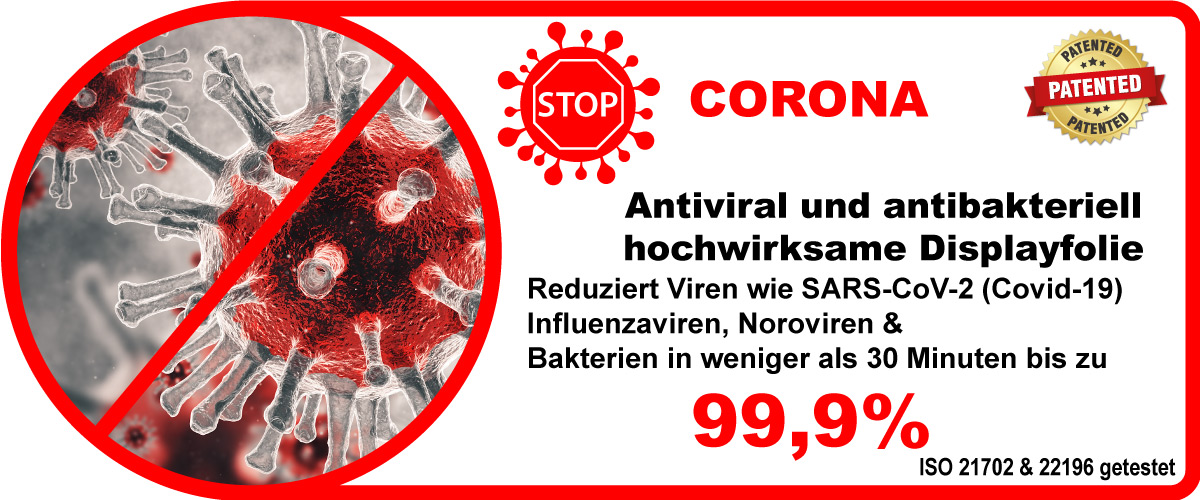
- Proven virus reduction: 88 % reduction of the human coronavirus strain 229E in 30 minutes, certified according to ISO 21702:2019-05 – a clear proof of quality for regulated procurement procedures.
- Antibacterially and antiviral: The dual effect protects against both viruses and bacteria, making its use particularly useful on smartphones, tablets, and clinical touchscreens.
- Compatible with hygiene protocols: The film is resistant to hospital-grade disinfectants and UV-resistant: it integrates seamlessly into existing cleaning routines without interrupting the process.
Data protection and privacy protection in clinical workplaces
Patient-related data are processed daily at medical workstations, reception desks and nurses' stations. Blinds and screens OnScreen® Privacy Hybrid glass limits the viewing angle to the display, so unauthorized third parties cannot see sensitive information. Data protection in the clinical context is not only a regulatory requirement: it also protects patients' trust in the facility.
Depending on the application environment, a clear prioritization is possible: For individual workstations with confidential data, the Privacy Hybrid Glass is recommended, as it combines scratch protection and visibility in one product. For shared terminals in waiting areas or at information kiosks without sensitive data displays, a standard anti-reflective film is sufficient; this optimises readability and ease of maintenance. Both variants are available precisely tailored to each display size.
Lifecycle efficiency and sustainability in clinics
Protective films and hybrid glass demonstrably extend the lifespan of displays in clinicsInstead of replacing the entire hardware at an early stage, only the protective medium is replaced modularly. This reduces the Company’s carbon footprint per year of use and supports circularity strategies in hospital operations. Digital door signs, kiosk terminals, and screen systems operated as signage solutions protected with protective films benefit directly from this extended lifespan. Additionally, eye strain for staff is reduced through optimized glare reduction: this increases employee satisfaction and operator accuracy in medical HMI systems.
Attention
Ordered the wrong size: The foil does not fit correctly
Always measure the actual display area, display frame inner edge to display frame inner edge, in both millimeters for width and height before ordering a protective film. Manufacturer specifications in inches refer to the screen diagonal and are insufficient for a precise fit. We explain why this is the case here.!
 German
 English
 Swedish
 Italian
 Dutch
 . A strong 256-bit encryption secures the data transfer. With our externally issued SSL certificate, we are transparent and compliant. In addition to the SSL-secured website, we take data protection very seriously.
Recent Comments